

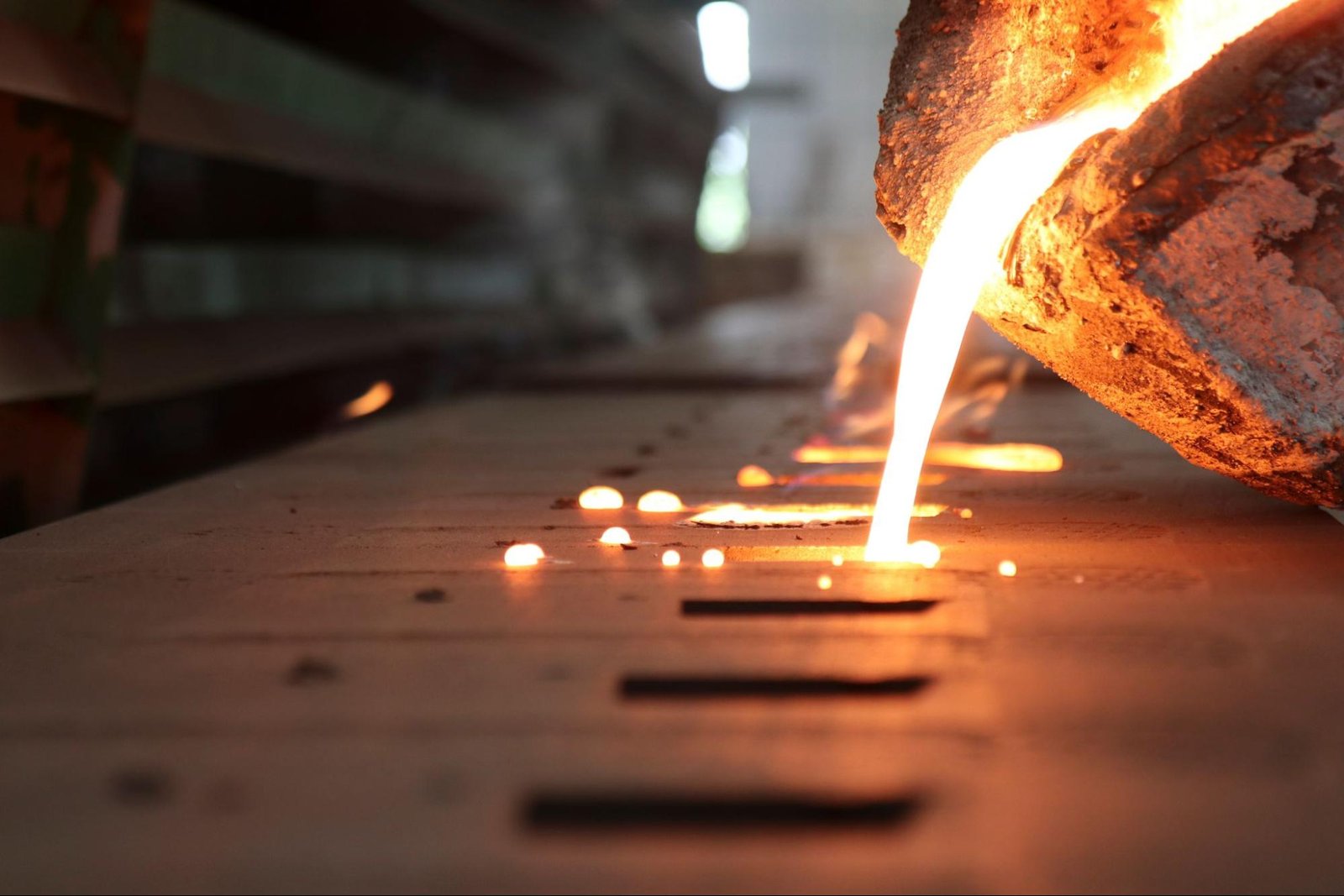
Waste often hides inside production costs. Extra cutting, discarded metal, and repeated finishing work steadily consume resources. Manufacturers seeking tighter material control often examine casting methods before equipment upgrades. Through precise mold creation and accurate shaping, thailand investment casting helps produce detailed components while limiting unnecessary metal removal across production lines.
Precision Shapes Create Immediate Material Savings
Every gram removed through machining carries a cost. Raw stock purchases rise, while scrap collection increases handling requirements. Investment casting changes this equation by forming parts near final dimensions.
Complex passages, curved profiles, and thin walls emerge directly from molds. Less cutting follows. Material remains inside the component rather than ending inside waste containers.
Where Does Excess Material Commonly Disappear?
Production losses appear through several overlooked activities.
- Large machining allowances consume valuable metal
- Repeated trimming creates avoidable scrap
- Incorrect dimensions trigger component rejection
- Heavy stock preparation raises consumption levels
Each activity removes value before products reach customers. Better dimensional accuracy reduces these losses across multiple manufacturing stages.
Design Freedom Brings Operational Advantages
Engineers often balance performance against production limitations. Investment casting expands available design options without requiring extensive secondary work. Internal channels, rounded transitions, and intricate details fit within a single manufacturing route.
A pump impeller offers a practical example. Traditional fabrication may require several operations. Cast production can achieve comparable geometry through one carefully controlled process.
Can Fewer Production Steps Improve Efficiency?
Shorter manufacturing chains often reduce material exposure. Every transfer introduces handling risks, dimensional variation, and potential damage. Streamlined production creates stronger consistency across large batches.
In industrial supply networks, thailand investment casting delivers value through dimensional repeatability. Reduced finishing requirements help maintain predictable schedules while preserving component quality.
Key Manufacturing Benefits Worth Considering
Several practical advantages influence purchasing decisions:
- Better metal utilization
- Lower scrap volumes
- Fewer corrective operations
Additional gains often include:
- Enhanced dimensional consistency
- Complex geometry capability
- Reduced finishing labor needs
- Improved production planning accuracy
Each benefit contributes differently depending on component design and application requirements.
Manufacturing Decisions Leave Lasting Effects
Material efficiency extends beyond factory floors. Lower scrap volumes reduce storage demands. Reduced machining decreases tool wear. Smaller waste streams simplify operational management. While machining remains valuable for selected applications, investment casting offers a stronger route when intricate geometries and material conservation share equal importance.
FAQs
Why does investment casting reduce material waste?
Near-net-shape production minimizes excess stock removal. Components emerge close to final specifications, reducing scrap generated through machining and trimming operations.
Which industries gain the most value?
Aerospace, automotive, energy, marine, and industrial equipment sectors often benefit. Complex metal parts frequently suit investment casting requirements.
Does investment casting improve product consistency?
Yes. Controlled mold production helps maintain dimensional accuracy across larger manufacturing runs, reducing variation between finished components.
Is investment casting suitable for intricate designs?
Absolutely. Detailed shapes, internal passages, and thin-wall sections can be produced with strong dimensional control.
Why does reduced machining matter?
Less machining means lower material loss, decreased tool consumption, shorter production cycles, and fewer opportunities for dimensional errors.
