

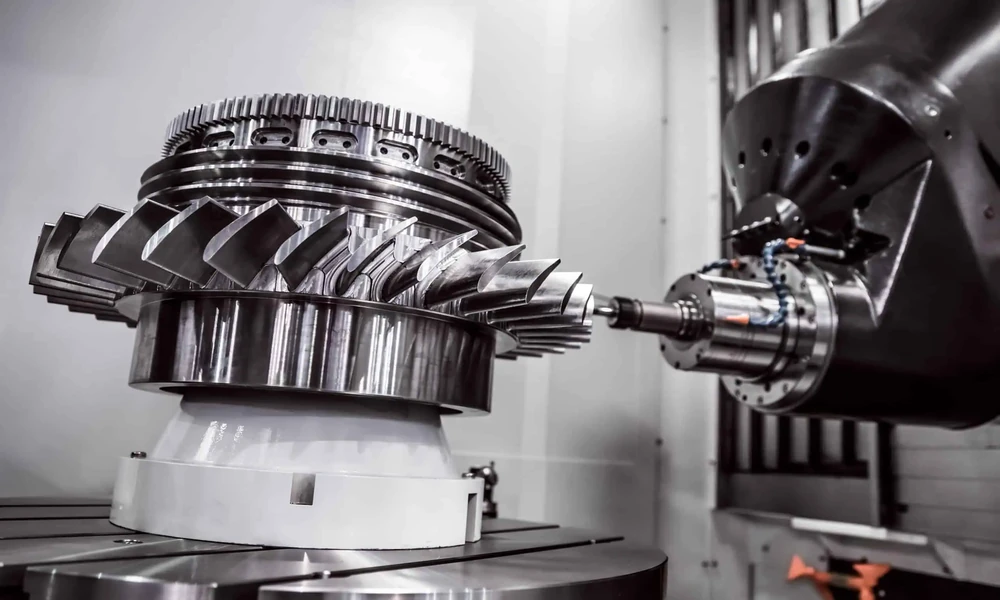
CNC machining is integral to contemporary manufacturing, particularly within the electronics industry. As electronic devices become increasingly compact and complex, manufacturers depend on CNC machining for several critical advantages, including:
Precision and Accuracy
Electronic components often need very tight tolerances, sometimes as small as a few microns, to work properly and reliably. CNC machining uses computer-guided movements to deliver consistent and repeatable accuracy that manual methods cannot achieve. This precision is crucial for making parts like connectors, housings, heat sinks, circuit board frames, and microelectromechanical systems (MEMS). As a result, electronic devices like smartphones and other industrial control systems perform better and are more reliable.
Rapid Prototyping and Short Lead Times
The electronics industry thrives on innovation and rapid development cycles. CNC machining enables quick turnaround on prototypes, allowing designers and engineers to test and refine their ideas efficiently. Unlike traditional manufacturing methods that require time-consuming tooling changes, CNC machines can switch between designs with minimal downtime. This agility accelerates product development, reduces time-to-market, and allows companies to respond rapidly to evolving customer demands or technological advancements.
Versatility in Material Processing
The electronics industry utilises a wide range of materials, including aluminium, copper, titanium, plastics, ceramics, and composites. CNC machining is highly adaptable and can process virtually any machinable material. This versatility allows manufacturers to select the best material for each application, whether it’s for thermal management, electrical insulation , or structural components using lightweight composites. The ability to machine a diverse array of materials ensures optimal performance and durability of electronic products.
Consistency and Repeatability in Production
CNC machining operates based on digital designs, ensuring that each produced part is identical to the previous one. Such consistency is essential in the electronics industry, where even minor deviations can lead to malfunctions or product failures. Automated CNC processes minimise human error and deliver reliable, repeatable outcomes, which are critical aspects for the mass production of components like circuit board frames, mounting brackets, and enclosures.
Reduced Waste and Cost Efficiency
Efficiency is a primary concern for electronics manufacturers, encompassing both material utilisation and overall production costs. CNC milling services and machining employ precise cutting tools and optimised tool paths to reduce material waste. Automation further decreases the need for manual intervention, thereby lowering labour costs and minimising the risk of errors. Additionally, the capability of CNC machining to rapidly change designs and cost-effectively produce low to medium volumes makes it well-suited for prototyping and limited production runs commonly required in the electronics sector.
Get Cutting-Edge Results Today at Rahi Engineering
With over 40 years of experience in providing precision CNC metal machining services to major clients, Rahi Engineering is dedicated to turning simple turned parts into complex custom components. Visit our website or call (07) 3875 1778 to discover our capabilities today.
