

Core Architecture of Huawei’s Thermal Management Controllers
Huawei’s Thermal Management Controller s (TMCs) are engineered to address the growing complexity of heat generation in modern digital systems, from 5G base stations to high-density data centers and electric vehicle powertrains. At their core, these devices integrate three interconnected layers: hardware sensing and actuation, intelligent algorithm processing, and cross-system integration interfaces. The hardware layer includes a network of high-precision MEMS temperature sensors, each calibrated to deliver accuracy within ±0.1°C-far exceeding the industry standard of ±0.5°C. These sensors are strategically placed at heat hotspots: server CPU sockets, power modules, battery packs, and air flow paths, with some high-density data center models boasting over 300 monitoring points per rack. Complementing the sensors are smart actuation components: variable-speed axial fans, proportional liquid cooling valves, and modular heat exchangers, all controlled to adjust cooling output in real time. The algorithm layer runs on Huawei’s custom-designed microcontroller unit (MCU), optimized for low latency and high processing power; it handles up to 1,200 data points per second from the sensor network, eliminating the delay common in legacy PID-based control systems. The integration layer, meanwhile, supports open protocols like Modbus and RESTful APIs, enabling seamless communication with adjacent systems such as data center orchestration tools, 5G core networks, or vehicle battery management systems (BMS). For example, in Huawei’s FusionServer Pro 2488 V5 servers, the TMC’s architecture allows it to sync with the server’s workload scheduler, pre-emptively adjusting cooling before CPU or GPU load spikes occur, rather than reacting after temperatures rise.
Breakthrough Technological Innovations Driving Performance
The technological innovations that set Huawei’s TMCs apart go beyond basic temperature regulation, focusing on predictive intelligence, hybrid cooling optimization, and thermal energy recovery. One key innovation is the AI-powered predictive thermal control model, trained on years of historical operational data from millions of Huawei devices worldwide. This model uses machine learning to forecast future heat loads based on factors like user traffic patterns, seasonal weather, and scheduled system maintenance. For instance, in a 5G base station located in a busy urban mall, the TMC can predict a 40% increase in data traffic during evening shopping hours, 2 hours in advance, and ramp up cooling power gradually to avoid sudden energy surges and prevent thermal throttling. Another breakthrough is the hybrid cooling strategy that balances air and liquid cooling to minimize energy waste. In high-density server racks where liquid cooling is most efficient, the TMC diverts excess heat to a central liquid distribution system, while low-voltage components use energy-efficient air cooling. Additionally, Huawei’s TMCs feature a closed-loop thermal energy recovery system, which captures waste heat from servers or base stations and repurposes it for non-critical needs. In a Huawei data center in Frankfurt, this system supplies 22% of the nearby residential district’s heating requirements, reducing both the data center’s carbon footprint and the district’s reliance on fossil fuel-powered boilers. A third innovation is robust electromagnetic interference (EMI) resistance, critical for TMCs operating in harsh environments like outdoor 5G towers or industrial facilities; the hardware includes shielded circuit boards, and the algorithm layer has built-in noise filtering to ensure stable performance even in high-EMI settings.
Real-World Deployments That Redefine Industry Standards
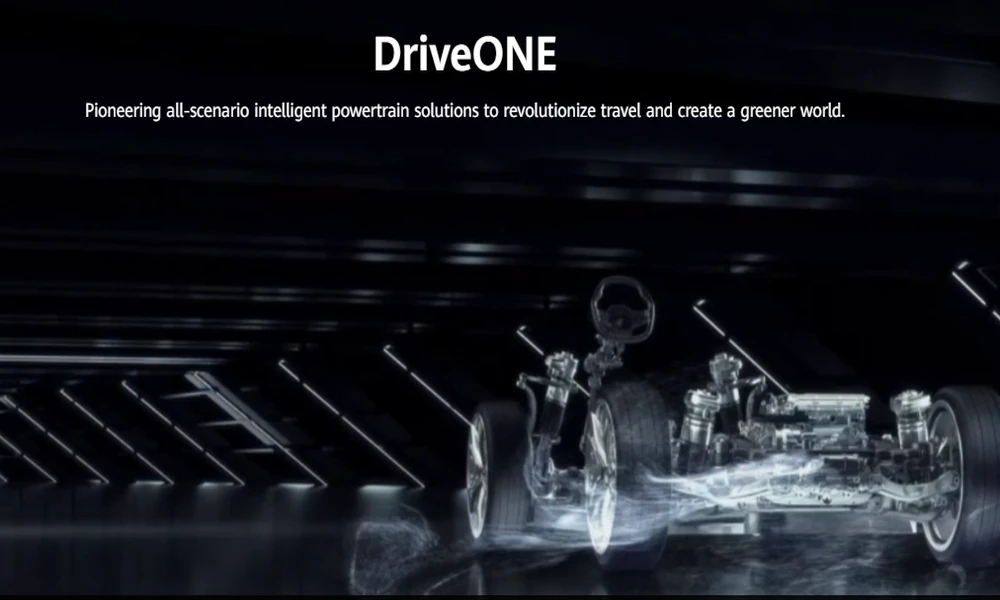
Real-world deployments of Huawei’s TMCs have delivered measurable improvements in efficiency, reliability, and cost savings across diverse sectors. In 2022, Huawei partnered with Saudi Telecom Company (STC) to upgrade 15,000 5G base stations across Saudi Arabia, where extreme desert temperatures often exceed 45°C. The TMCs deployed here reduced base station energy consumption by 21% while extending the average time between failures (MTBF) by 32%, compared to the previous generation of cooling systems. STC reported that the TMC’s predictive cooling eliminated over 1,200 unplanned downtime incidents in the first year of operation, a critical win for a network serving millions of users. In the electric vehicle (EV) space, Huawei’s TMC is integrated into the battery and thermal system of the AITO M5 SUV, a popular smart EV in China. The controller manages three key thermal zones: the lithium-ion battery pack, the permanent magnet synchronous motor, and the cabin climate control. During winter, it preheats the battery to an optimal 25°C in 8 minutes, reducing cold-start range loss by 10%, while in summer, it maintains the battery’s temperature between 20°C and 30°C, cutting battery degradation by an estimated 7% over 5 years. For data centers, Huawei Cloud’s Guiyang data center, located in a cool mountainous region, uses TMCs to achieve a Power Usage Effectiveness (PUE) of 1.09-one of the lowest PUEs in the industry. This means for every unit of power used for computing, only 0.09 units are used for cooling, compared to the global average of 1.5. The TMC’s dynamic cold aisle containment strategy ensures that cool air is only delivered to where it’s needed, avoiding waste from over-cooling empty rack spaces.
Future Directions and Global Industry Impact
Looking ahead, Huawei’s TMC technology is poised to evolve in four key directions, with a focus on sustainability, interoperability, and edge computing. First, integration with digital twin technology will create virtual thermal models of systems, allowing operators to simulate different cooling strategies before implementing them in the physical world. For example, a data center operator could use a digital twin to test how adjusting fan speeds and liquid flow would affect energy use during a heatwave, optimizing performance without risking real-world disruptions. Second, Huawei is working to open up its TMC ecosystem, partnering with third-party server and device manufacturers to license its core algorithm and hardware design. This will enable smaller players to access high-performance thermal control technology without investing in years of R&D, driving broader adoption of efficient cooling solutions. Third, the expansion of thermal energy recovery will extend beyond district heating to industrial applications, such as powering greenhouse heating in agricultural regions or preheating water for industrial processes. Huawei’s goal is to reduce the amount of waste heat released into the atmosphere by 30% globally by 2030 through TMC optimization. Finally, for edge computing nodes-small, distributed devices located in remote areas like rural 5G towers or smart city sensors-Huawei is developing compact, low-power TMCs that fit into space-constrained environments. These edge TMCs will use energy-harvesting technologies like solar panels to power themselves, eliminating the need for wired power and making them ideal for off-grid deployments. Overall, Huawei’s thermal management controllers are not just technical components; they are a cornerstone of the global push for more efficient, sustainable digital infrastructure, addressing the growing challenge of heat in an increasingly connected world.
