
Oil looks simple to fill until you try to do it accurately at speed. Thin cooking oils flow quickly and may splash, while heavy gear oils and lubricants move slowly and cling to nozzles. Temperature changes alter flow rates throughout the day. Choosing an oil filling machine means understanding how viscosity affects every stage of the filling process. This article explains the relationship between viscosity and filling requirements and how to select equipment that handles your oil correctly.
What Viscosity Means
Viscosity describes how easily a liquid flows. Low-viscosity liquids, such as water or light oils, flow freely. High-viscosity liquids, such as heavy lubricants and greases, flow slowly. Viscosity affects how quickly an oil moves through pipes, pumps and nozzles, how much pressure is needed and how accurately it can be dispensed. Understanding your product’s viscosity is the starting point for choosing filling equipment. It is usually measured in centipoise or similar units, and suppliers will often ask for this figure when recommending equipment.
Range of Oil Products
Oils cover a wide viscosity range. Common examples include:
- Edible oils, such as vegetable and palm oil
- Engine oils of various grades
- Hydraulic oils
- Gear oils and heavy lubricants
- Essential and specialty oils
Each type behaves differently during filling and may require different equipment.
Effect of Temperature
Oil viscosity changes with temperature. Warm oil flows more easily, while cold oil becomes thicker. In factories without temperature control, viscosity may vary through the day, affecting fill accuracy. Some filling systems include heating elements or temperature compensation. Keeping product temperature consistent helps maintain accuracy. Filling rooms that heat up during the afternoon can produce slightly different fills from those in the cooler morning.
Choosing the Right Filling Method
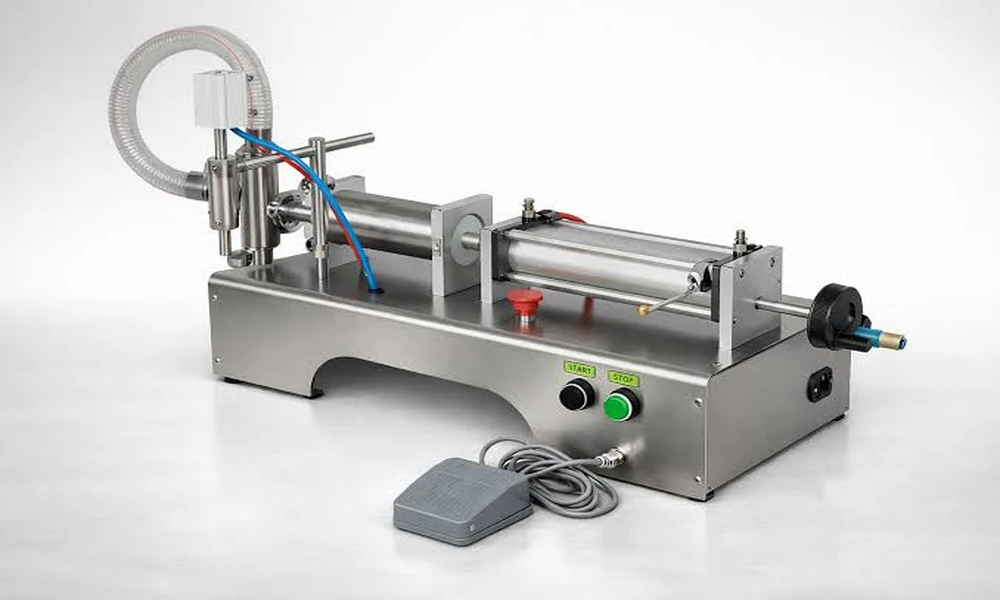
Different filling methods suit different viscosities. Gravity fillers work well for thin oils but struggle with thick products. Piston fillers handle a wide range of viscosities and provide good accuracy. Pump fillers, such as gear or lobe pumps, can move thick oils efficiently. Weight-based fillers measure the product directly, which reduces errors caused by viscosity changes. Matching method to product is essential. For businesses filling several grades, a pump or piston system often handles the widest range.
Nozzle Design and Drip Control
Oil tends to drip from nozzles after filling, especially thicker products. Drips waste product, contaminate containers and create mess on production lines. Nozzles with shut-off valves, anti-drip mechanisms and suck-back features help reduce dripping. When selecting an oil filling machine, nozzle design is as important as the filling method itself. Even a small drip on every container adds up to significant waste and cleaning time over a year.
Fill Accuracy
Accuracy is important for both cost control and compliance. Oils sold by volume or weight must meet declared quantities. Viscosity variations can affect accuracy if the filling system does not compensate. Weight-based filling and servo-driven piston systems are often used where high accuracy is required. Regular calibration helps maintain performance. Checking a sample of filled containers on a scale at the start of each shift is a simple control.
Container Types
Oils are packed in bottles, cans, pails, jerry cans and drums. Container shape and size affect filling speed and nozzle positioning. Narrow-neck bottles may need slower filling to avoid splashing. Larger containers may need bottom-up filling to reduce foaming and splashing. Considering the range of containers helps choose suitable equipment. Changing between container types should be quick, with clear settings stored for each.
Hygiene and Contamination
Edible oils require food-grade equipment with hygienic design and easy cleaning. Industrial oils may need equipment resistant to chemical exposure. Preventing contamination between products is important for facilities handling multiple oils. Easy-to-clean components and clean-in-place systems help maintain hygiene and reduce changeover time. Changing between edible and industrial oils on the same machine is generally not advisable.
Safety Considerations
Some oils are flammable or present slip hazards when spilled. Filling areas should be designed to contain spills and maintain safe working conditions. Explosion-proof equipment may be required for certain products. Drip trays, guards and emergency stops improve safety. Following safety regulations and supplier recommendations is essential. Anti-slip flooring around the filler is a simple and effective precaution.
Testing With Your Product
Testing equipment with your actual product is one of the best ways to confirm suitability. Suppliers can often run trials using samples to assess flow, accuracy and dripping. Testing helps identify any adjustments needed before purchase. Useful information for testing includes:
This ensures the equipment performs as expected.
Cleaning Between Grades
Facilities that fill several oil grades on one machine need a reliable way to change over without cross-contamination. Flushing the system with the next product, purging lines with air or using dedicated hoses for each grade are common approaches. The choice depends on how sensitive each product is to mixing. Machines with fewer dead spots and easy-to-remove parts make changeovers quicker and reduce the amount of product lost during flushing.
Choosing the Right Equipment
Understanding viscosity and filling requirements helps manufacturers choose equipment that fills oils accurately and efficiently. Working with an experienced supplier makes the process easier. For lubricants and thick oils, a supplier of viscous oil filling machines can recommend equipment matched to your product and production needs. Sharing the full range of grades you fill helps the supplier recommend one machine rather than several.
