

Key Takeaways
- Large guest counts in halal wedding catering introduce production, transport, and on-site handling risks that are not present in smaller events.
- Certain menu items create bottlenecks due to halal compliance requirements, temperature control limits, and plating time constraints.
- Live or labour-heavy items increase manpower needs and extend service windows, raising the risk of service delays.
- Menu planning for catering in Singapore should prioritise items that scale consistently without compromising halal handling protocols.
Introduction
Halal wedding catering becomes operationally complex when guest counts exceed 200-300 pax, especially for buffet-style receptions or mosque and community hall venues with fixed service windows. At scale, the issue is not taste or menu appeal but whether food items can be produced, transported, reheated, plated, and served within halal-compliant workflows without compromising food safety or service timing. Additionally, large weddings expose weaknesses in menu design because certain dishes do not scale cleanly across hundreds of portions. These items require more handling, longer assembly times, stricter temperature control, or additional halal-compliant equipment on site, which increases the risk of service delays, food quality degradation, and compliance breaches.
1) Live Cooking Stations (Teppanyaki, Satay, Prata)
Live stations are often requested to enhance the guest experience, but they are among the most operationally difficult elements in halal wedding catering in Singapore for large crowds. Each live station is constrained by cooking throughput per minute, halal-certified cooking equipment, and the availability of trained halal kitchen staff. Remember, for high guest volumes, queues form quickly, service slows, and food quality becomes inconsistent as operators rush to meet demand. Live stations also increase the complexity of on-site compliance because raw ingredients, cooked food, utensils, and waste disposal must be segregated clearly to avoid cross-contact risks. Power supply, ventilation, and heat management further limit how many live stations can operate safely at one time, making these items difficult to scale without extending service time or increasing manpower significantly.
2) Slow-Braised Meats and Bone-In Dishes
Items such as braised lamb shank, beef rendang with large cuts, or bone-in ayam masak merah are labour-intensive to portion and plate at scale. These dishes require extended cooking times, large-volume holding equipment, and careful temperature control during transport and service. Slow-braised meats also present logistical challenges because portion consistency matters for cost control and guest satisfaction, yet cutting and plating hundreds of portions on-site slows service flow. These dishes may also increase the risk of food cooling below safe holding temperatures during peak service windows, particularly at venues with limited hot-holding capacity. The longer these items sit in warming equipment, the higher the risk of texture degradation, which affects perceived quality across large guest counts.
3) Customised Plated Starters and Individual Appetisers
Plated starters, mini appetisers, and individually portioned canapés look premium but create assembly bottlenecks when scaled beyond small receptions. Each customised plate requires manual assembly, garnish control, and precise portioning, all of which increase prep time and labour costs. Remember, for large guest counts, the staging area becomes congested, and service timing becomes vulnerable to small delays compounding into long waits. Plated appetisers also increase packaging and transport complexity, as items must be arranged in trays that preserve presentation while maintaining food safety temperatures. This instance creates additional logistical pressure on both kitchen prep and on-site service teams.
4) Temperature-Sensitive Desserts and Cold Items
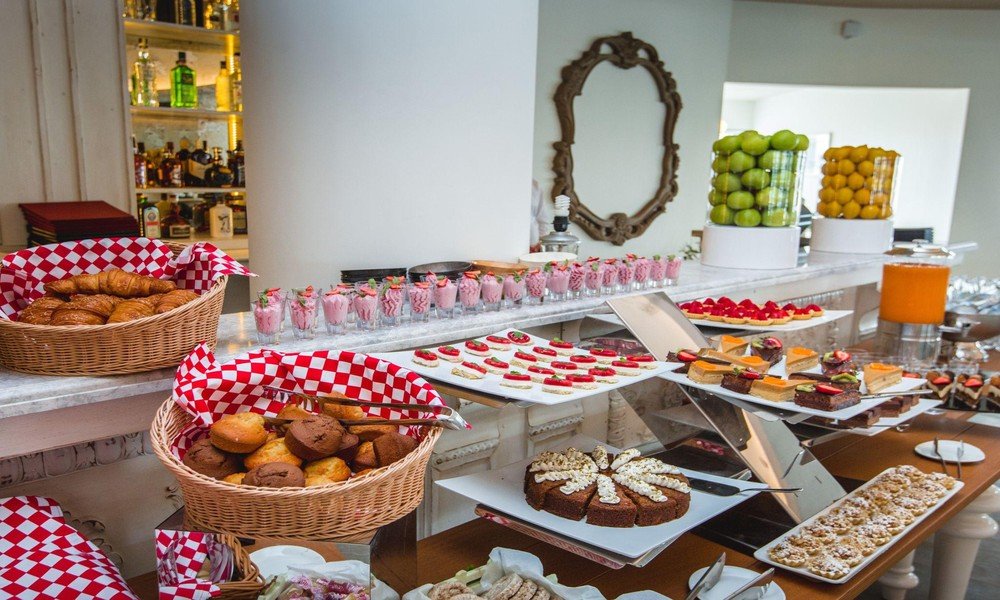
Cold desserts such as mousse cups, chilled kuih, and cream-based pastries are challenging to manage for large-scale catering in Singapore because they require strict cold-chain control from kitchen to venue. After all, for large guest counts, refrigeration capacity on-site is often limited, which forces caterers to stagger deliveries or rely on portable chillers. High humidity and warm ambient temperatures increase the risk of condensation, melting, and texture breakdown, especially during extended service windows. Dessert stations also experience peak demand towards the end of the event, creating congestion that strains temperature control measures and presentation standards simultaneously.
Conclusion
Halal wedding catering in Singapore works best when menus are designed for scale, speed, and compliance rather than novelty. That said, avoiding labour-heavy live stations, slow-plated meats, customised starters, and temperature-sensitive desserts reduces operational risk, service delays, and food quality issues across high guest counts.
Contact Elsie’s Kitchen and let us help you plan a large wedding without being worried about service breakdowns halfway through your banquet.
