

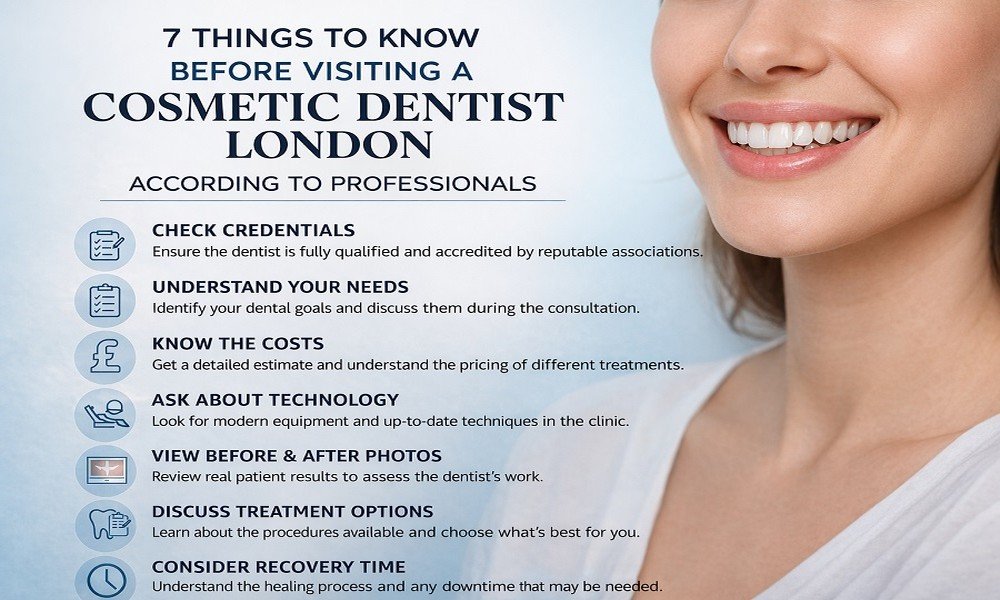
Booking a cosmetic dental consultation can feel like a simple next step, especially if you already know what bothers you about your smile. In practice, the best outcomes usually come from slowing down before treatment starts. Cosmetic dentistry sits at the point where appearance, oral health, function, budget and long-term maintenance all meet. That means the smartest first move is not choosing the brightest result or the most fashionable treatment, but understanding what is being changed, why it is being changed, and what you will be responsible for afterwards.
In brief advice for readers considering a cosmetic dentist London, a cosmetic dentist from MaryleboneSmileClinic says the consultation should begin with diagnosis rather than design alone: the condition of the teeth, gums and bite needs to be assessed before any discussion about whitening, bonding, veneers or more extensive smile changes. Marylebone Smile Clinic’s website identifies Dr Sahil Patel as part of its team and describes him as an accredited cosmetic dentist.
Your Mouth Has to Be Healthy Before It Can Be Made More Attractive
One of the most common misunderstandings around cosmetic dentistry is that it works separately from routine dental care. It does not. If you have gum inflammation, untreated decay, enamel wear, grinding, a poor bite, or old restorations that are already failing, those issues can affect both the safety and the appearance of cosmetic treatment. Whitening on unhealthy teeth, for example, may leave you chasing colour changes while the real problem is sensitivity or leaking fillings. Veneers and bonding can also look less convincing when the surrounding gums are swollen or uneven. A good consultation should therefore begin with an examination, photographs where appropriate, and a discussion of what needs stabilising first, rather than a rush to the final cosmetic option.
This matters in London because many patients are balancing private cosmetic goals with existing NHS or general dental care. Cosmetic treatments such as whitening, veneers and implants are generally outside ordinary NHS provision except in limited circumstances, so patients often move into the private system expecting a straightforward purchase. In reality, you are not buying a product off the shelf. You are agreeing to care that depends on the current state of your mouth and on how well your teeth can support the proposed change. The more elective the treatment, the more important the initial diagnosis becomes, because healthy, stable teeth usually give the most predictable aesthetic results and the least disappointment later on.
Not Every Popular Treatment Solves the Problem You Actually Have
Patients often arrive asking for one treatment when a different one would be more suitable. Someone who wants veneers may really need whitening plus minor edge bonding. Someone considering composite bonding may actually have bite issues that would shorten the life of the material. Another patient may think straight white teeth are the goal, when the more obvious issue is uneven gum display, worn edges or mismatched old dental work. This is why cosmetic dentistry works best when the concern is described in plain language first. Saying “my teeth look short in photos” or “these two front teeth don’t match” is often more helpful than asking for a named procedure before you have been examined.
The reverse is also true: some treatments have limits that are easy to overlook when viewed only through social media results. Whitening changes the shade of natural teeth but will not change the colour of existing fillings, crowns or veneers. Veneers can improve shape, shade and some alignment issues, but they are not a substitute for proper orthodontic assessment in every case. Bonding can be conservative and effective, but it may chip or stain sooner than ceramic options in patients with heavy wear or strong habits. A careful dentist should explain not only what a treatment can do, but what it cannot do convincingly, and what trade-offs come with each route.
The Best Consultation Is About Consent, Not Sales
A worthwhile cosmetic consultation should leave you better informed, not merely more persuaded. In the UK, dentists are expected to obtain valid consent before treatment starts, which means explaining relevant options, risks, likely benefits and costs. That standard matters even more in cosmetic work because the treatment is often elective. A patient may be clinically able to proceed and still decide not to, once the alternatives and maintenance burden are set out clearly. The professional value of the consultation lies in that honesty. If the entire appointment feels built around urgency, idealised before-and-after language or pressure to commit quickly, you may not be getting the full picture you need in order to make a sound decision.
This is where the quality of questions becomes important. You should expect clear answers on how much natural tooth structure may need to be altered, whether the treatment is reversible, how long the result is likely to last, what type of repairs are common, and what happens if you are not happy with shade or shape after fitting. Consent is not just a signature on a form. It is an understanding of what your teeth will look like, how they may feel, how they may age, and what future dental work may become more complicated because of the cosmetic choice you make today. Good clinicians welcome those questions because they know realistic expectations protect both patient confidence and treatment quality.
Costs Are About More Than the First Fee You Are Quoted
Many London patients compare cosmetic treatments by headline price, but the more useful comparison is lifetime value. Lower-cost treatment can still be the right choice, especially when the goal is modest improvement, but it is worth asking what is included and what is likely to happen later. Whitening may seem simple, yet you may need maintenance top-ups. Composite bonding may be more affordable at the start, but it can require polishing, repair or replacement over time. Ceramic restorations often involve higher laboratory costs, but may hold colour and shape better in the right case. None of this means one category is always superior. It means the true cost is the initial fee plus maintenance, reviews, hygiene care, replacement cycles and the consequence of any avoidable failure.
That broader view matters because cosmetic work rarely stands still. Teeth continue to age, existing fillings can darken, gum levels can change, and habits such as clenching can shorten the life of restorations. Even well-made crowns and veneers do not last forever. Patients who understand this early usually make steadier decisions because they stop looking for a permanent “fix” and start looking for a treatment plan they can realistically maintain. If a clinic discusses finance but not upkeep, or presents cosmetic dentistry as a one-time purchase with no future responsibilities, that is a sign to ask more questions before proceeding.
The Most Natural Result Usually Comes From Restraint
A successful cosmetic result is not always the most obvious one. In fact, the work that tends to age best is often the least conspicuous. British patients increasingly want teeth that look healthier, cleaner and more balanced rather than unnaturally uniform. That may mean preserving slight individuality in tooth shape, avoiding shades that look disconnected from skin tone and age, and treating only the teeth that genuinely need change. The temptation to over-correct is understandable in a city where image matters and where many patients compare themselves to highly edited online photographs. Yet the most persuasive result in real life is usually one that suits the face, the lips, the speech pattern and the way the person already smiles.
This is one reason to be careful with reference images. They can help a dentist understand what you like, but they can also distort expectations because another person’s tooth proportions, facial symmetry and gum position may have little to do with your own. The aim should not be copying a smile but designing a result that looks coherent on you. In practical terms, that often means discussing proportion, translucency, edge shape and gum balance rather than asking for teeth to be simply whiter or bigger. A skilled cosmetic dentist London patients trust will normally speak in those more measured terms, because natural-looking work depends on restraint and planning rather than maximum intervention.
Aftercare Will Influence the Final Outcome as Much as the Procedure
Cosmetic treatment does not end when you leave the surgery. The longevity of the result often depends on what happens next: oral hygiene, review appointments, diet, smoking habits, stain exposure, grinding control and how quickly small issues are dealt with. Whitening may require top-up use within professional guidance. Bonding may need periodic refinishing. Veneers and crowns still need careful cleaning at the gumline, because the surrounding tooth and gum tissue remain biologically active even if the visible surface has been improved. Patients sometimes assume cosmetic work is tougher than natural teeth and therefore lower maintenance. The opposite mindset is safer. Once you invest in elective dentistry, routine upkeep becomes more important, not less.
This also affects who is a suitable candidate in the first place. Someone who wants a dramatic cosmetic change but struggles to attend routine check-ups, has persistent gum disease, or grinds heavily at night may need a more conservative plan than they first imagined. Dentists should not assess suitability by appearance alone. They should look at whether the proposed treatment is practical for your habits and lifestyle. That can feel frustrating when you want a quick answer, but it is usually a sign of responsible care. Cosmetic dentistry should improve confidence without creating a long trail of avoidable maintenance problems that could have been anticipated at the start.
London Choice Can Be an Advantage if You Use It Properly
London gives patients access to a wide range of cosmetic dental providers, from general practices offering selected aesthetic procedures to clinics focused heavily on smile design. That choice can be valuable, but only if you use it to compare substance rather than branding. Instead of judging by polished websites alone, pay attention to whether a clinic explains limitations, records oral health properly, distinguishes between treatment categories and sets out likely maintenance. Ask how planning is done, how outcomes are reviewed, and what happens if treatment needs refining. The point is not to become suspicious of every provider. It is to remember that cosmetic dentistry is still healthcare, even when appearance is the main reason for seeking it.
For most people, the best first appointment is the one that leaves them with a clearer understanding of their mouth than they had before. By the time you choose a provider, you should know whether your concern is mainly colour, shape, position, wear, gum display or a combination of several factors. You should also know what can be improved conservatively, what may require more commitment, and what maintenance will be expected of you. Approached that way, a visit to a cosmetic dentist becomes less about chasing a trend and more about making a measured decision that fits your teeth, your budget and your long-term dental health.
