

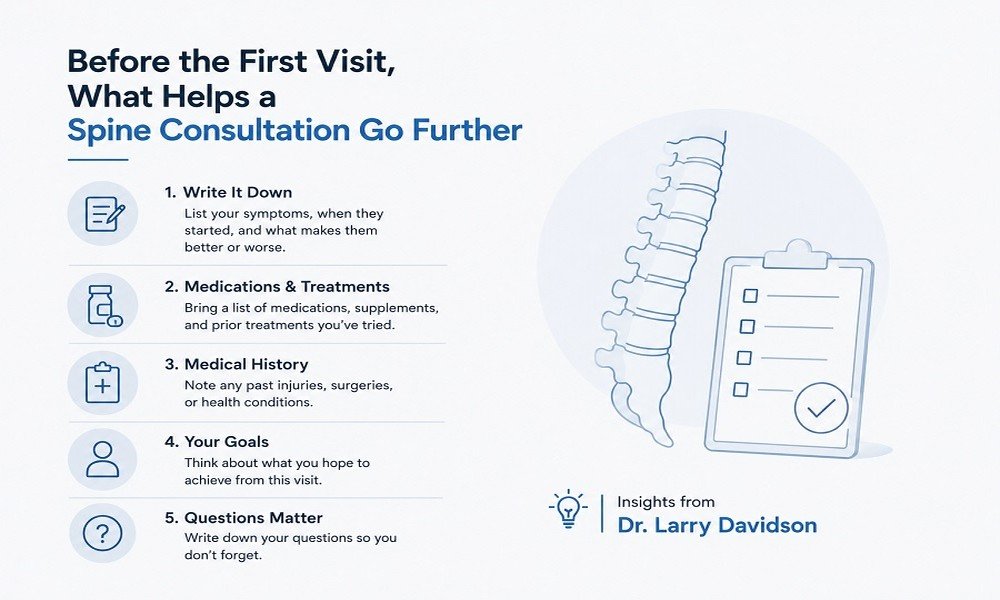
For many patients, a spine consultation marks the point where symptoms that have lingered or gradually worsened finally receive focused attention. It can also be a moment filled with uncertainty, especially when the cause of pain is not entirely clear. Rather than approaching the visit as a one-time opportunity for answers, it is often more useful to view it as the beginning of a structured evaluation. Dr. Larry Davidson, a board-certified neurosurgeon with fellowship training in complex spinal surgery, often sees how preparation shapes the quality of that first conversation and helps bring important details into focus.
Approaching the consultation with some level of preparation does not require medical expertise. It simply means organizing information in a way that allows the discussion to move beyond general symptoms and toward a more precise understanding of what may happen.
Turning Symptoms into a Clear Narrative
Describing symptoms clearly is one of the most valuable ways to prepare. Pain that shifts location, changes intensity or responds differently to movement can provide important clues, but those patterns are not always easy to explain in the moment.
Taking time beforehand to think through when symptoms began, what seems to aggravate them, and whether they are improving or becoming more consistent can make a meaningful difference. Even small details, such as how long discomfort lasts after certain activities, can help shape the evaluation. This kind of clarity allows the consultation to focus less on recalling events and more on interpreting what those patterns may indicate.
Looking Back at What Has Already Been Tried
Most patients arrive having already taken steps to manage their symptoms. These efforts may include over-the-counter medications, structured physical therapy, or informal changes in activity levels. Each of these attempts provides useful information.
Understanding how the body responded, whether there was temporary relief or no noticeable change, helps narrow the range of possible causes. It also prevents repetition of approaches that have already been explored without success. Bringing this information into the conversation allows the evaluation to build on prior experience rather than starting from the beginning.
Keeping Questions from Getting Lost in the Moment
It is common for patients to leave a consultation and realize that certain questions were never asked. The amount of information discussed during a visit can make it difficult to keep track of everything in real time.
Writing down a few key questions in advance helps keep the conversation grounded. These questions might focus on understanding the diagnosis, exploring treatment options, or clarifying what the next steps may involve. Having these points prepared for the consultation helps address both clinical findings and personal concerns.
Understanding What Imaging Can and Cannot Show
Imaging often carries a sense of expectation, particularly when patients anticipate that scans will provide definitive answers. While MRI and other studies offer detailed views of the spine, they do not always explain symptoms on their own.
Structural changes are common, and not all findings are clinically significant. What matters is how those findings relate to what the patient is experiencing. That is why imaging is interpreted alongside physical examination and symptom history. Recognizing this relationship helps patients approach imaging results with a more balanced perspective.
Sharing the Context of Daily Life
Symptoms do not exist in isolation. Daily routines, work demands and activity levels all influence how the spine is used and how discomfort develops over time. These patterns often provide important contexts that may not be immediately apparent during a standard clinical discussion.
Being open about these factors adds an important layer of context. Whether it involves long hours at a desk, repetitive physical tasks or limited movement throughout the day, these details can shape both diagnosis and treatment recommendations. This broader view allows the consultation to reflect not just the condition itself but how it fits into everyday life.
Adjusting Expectations for the First Visit
A consultation is often the starting point of a longer process rather than a single, definitive answer. In some cases, additional testing may be needed. In others, a trial of treatment may help clarify how symptoms respond.
Understanding this ahead of time helps reduce frustration. The purpose of the visit is often to narrow possibilities and establish a direction rather than resolve every question immediately.
This mindset allows the discussion to remain focused and productive.
How Preparation Shapes the Conversation
When patients arrive prepared, the consultation becomes more than a basic exchange of information. It allows for a deeper discussion about how symptoms, findings, and treatment options connect. This level of preparation also helps the conversation move more efficiently toward meaningful insights rather than revisiting basic details.
Dr. Larry Davidson points to the importance of this early clarity in shaping care, saying, “Preparing patients for what to expect is just as important as the procedure itself. They come in that morning, get prepped, have the surgery, recover in a dedicated area, and only go home once it is medically safe to do so.” His perspective highlights how preparation influences not only outcomes but the overall experience of care from the very beginning.
Although it reflects the surgical setting, the same principle applies at the consultation stage. Setting expectations early helps guide both the evaluation and the decisions that follow. It also provides a clearer framework for how each step in the process connects to the next.
Creating Space for a More Focused Dialogue
A well-prepared visit naturally leads to a more focused conversation. Instead of spending time clarifying basic details, both the patient and physicians can concentrate on interpreting information and exploring the next steps.
It also creates room for a more balanced exchange, where patients can engage actively and consider how different options align with their needs. The consultation becomes less about receiving information and more about working through it together. That shift often leads to clearer and more practical outcomes.
Starting the Process with Better Direction
Preparation does not change the condition itself, but it changes how effectively it is evaluated. Organizing symptoms, understanding prior efforts and approaching the visit with clear questions all contribute to a more structured experience.
Rather than leaving with uncertainty, patients are more likely to come away with a clearer sense of direction. This foundation supports the next steps in care, whether that involves further evaluation, continued conservative treatment, or consideration of other options.
