

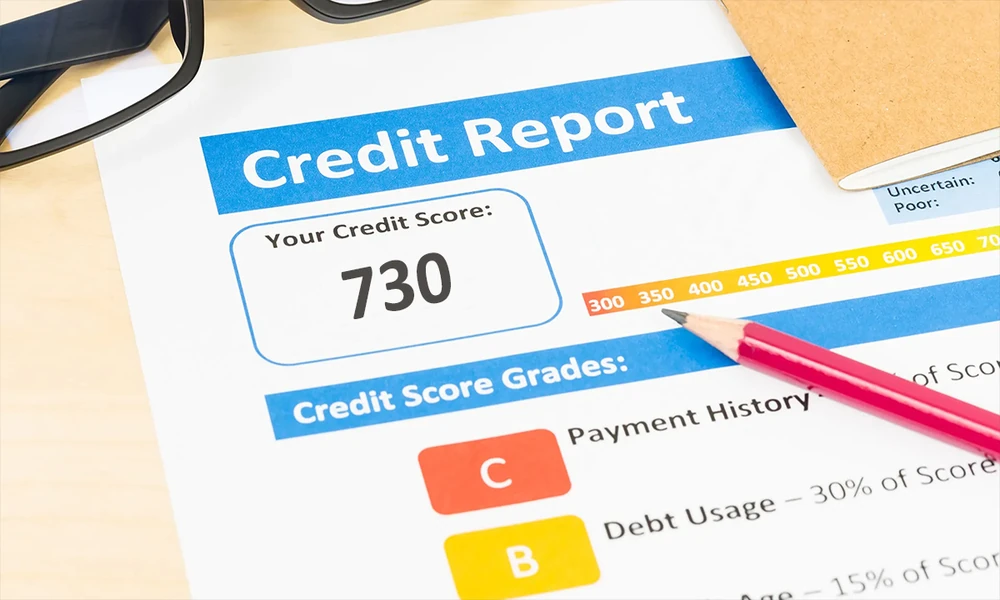
Imagine an employer making an immediate decision based on your GPA, followed by a thorough review of your complete resume. In personal finance, your credit profile works the same way.
People often treat “credit score” and “credit report” as if they are the same thing. But knowing the difference can save you from unpleasantly high-interest rates and unexpected loan denials. Understanding both terms is vital to managing your finances, because your credit score check is an efficient way to understand your financial position, while requesting your credit report provides insight into the reasons behind your score.
To sum it up, here are the main differences between credit score and credit report, as well as their importance.
What Is a Credit Score?
A credit score is a three-digit representation of your level of trustworthiness when it comes to handling financial matters. Credit scores in India range from 300 to 900 and are generated by credit bureaus through mathematical calculations. Credit scores help lenders judge the level of risk involved in lending to you within seconds.
Important Factors That Will Determine Your Credit Score
- Payment Record (35%): Paying your credit card bills and EMI for loans on time.
- Credit Utilization (30%): The amount of credit used relative to the total credit limit.
- Credit Age (15%): The age of the credit account opened.
- Credit Type (10%): The proportion between secured loans such as home or vehicle loans and unsecured loans such as cards and personal loans.
- Inquiries and New Credit (10%): How frequently you apply for a new line of credit.
Rule of Thumb: A score of 750 or above generally opens doors to quick approvals and competitive interest rates.
What Is a Credit Report?
Consider your credit report like a photo album documenting all your monetary endeavours. You check it when you are monitoring payments on the loans you’ve taken out. The information in it is more telling than just having that score.
You could actually share precisely 720 with somebody for wholly different reasons: whereas one person may really have a totally unblemished report, another might have an historical account that was compensated and settled.
What shows on Your Credit Report?
- Personal Information: Full name, address and contact details, professional background, and IDs (PAN, Aadhaar).
- Account Summary: Information on every credit card, mortgage, or personal loan that is still active or was terminated before.
- Payment Records: A month-by-month record showing whether payments were made on time, delayed, or missed.
- Hard Enquiries: A log of every time a bank or lender pulled your credit file to evaluate a loan application.
- Public & Negative Records: Detailed notes on default accounts, written-off amounts, or debt settlements.
Credit Score vs Credit Report: Side-by-Side Comparison
To see how they stack up, here is a quick overview of the key differences:
| Feature | Credit Score | Credit Report |
| Format | 3-digit number (300 to 900) | Multi-page detailed document |
| Primary Purpose | Fast risk assessment tool for lenders | Comprehensive record of borrowing behavior |
| Information Source | Calculated directly from the credit report | Compiled from data reported by banks & NBFCs |
| Primary Use Case | Initial filtering of loan applications | In-depth underwriting and verification |
| Actionability | Shows where you stand financially | Shows why your score is high or low |
Why Knowing Both Matters Before You Borrow
If you just have your score, you’re guessing. If you check your credit score and see a drop you didn’t expect, only your report can tell you why.
Reviewing both your credit score and report before applying for credit provides clear advantages, such as identifying errors and better understanding your eligibility.
- Spotting Errors Early: Credit bureaus process millions of records monthly. Clerical errors, such as an account incorrectly marked as overdue or an unfamiliar loan, happen more often than you think.
- Reducing Hard Enquiries: If you apply for several loans without investigating other options, you may get many “hard enquiries”, which will hurt your score. Therefore, it’s better to check the report first to know whether you are eligible for the loan.
- Fixing Red Flags: Identifying old unpaid balances or high credit utilisation early allows you to take corrective steps months before applying for a loan, improving your chances of approval.
How to Conduct a Credit Score Check the Smart Way
Checking your financial standing should be part of your routine rather than an emergency measure. Here is how to keep tabs on your profile efficiently:
- Claim Your Annual Free Reports: Reserve Bank guidelines entitle you to one free full credit report from each authorised bureau (CIBIL, Experian, Equifax, and CRIF High Mark) every year.
- Use Digital Platforms for Quick Audits: If you want to check your score instantly without triggering a hard inquiry or hurting your credit rating, you can leverage financial platforms and modern fintech tools. For instance, you can safely check your credit score for free on an online loan app in just a few minutes to see where you stand.
- Review Line-by-Line: Check all current accounts, balances, and other identity-related information carefully.
- Dispute Inaccuracies Immediately: If you see any incorrect information in the report, you should file a dispute with the relevant credit bureau online.
Using an accessible online loan app can also streamline the process by giving you quick, soft-check insights into your borrowing power before you submit a formal application.
Final Thoughts
Your credit score and credit report are not the same thing; one is the headline, the other is the full article. If you get into the habit of checking both, not just the number, you’ll be in a much better position next time you apply for a personal loan or any other type of credit.
A five-minute credit score check today could save you from a rejected application or a higher interest rate tomorrow. It’s a little habit that makes a big difference.
