

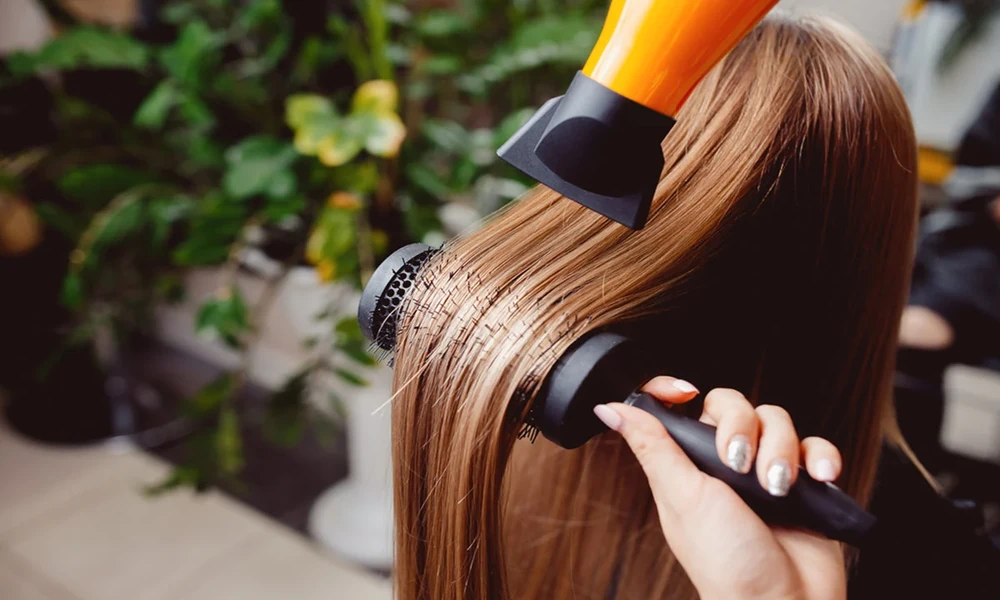
A flat iron, a curling wand and a good blow dryer can turn an ordinary morning into a polished one in under twenty minutes. That’s why so many people use them every day without much thought. The catch is that hair can’t repair itself. Every strand is made of protein that is no longer alive, so whatever happens to it stays there until it gets cut off.
That’s why heat damage builds up so gradually. A single hot pass rarely changes anything you can see. Hundreds of them over a year slowly lift the outer layer of each strand, drain moisture from its core and leave ends that snap with the slightest tug. By the time frizz and dullness become obvious, the damage is usually months old.
Plenty of people only rethink their routine after a stylist points out the problem. Anyone looking into hair styling in Montgomery County will find salons like joliespa.com that handle cuts, color, smoothing treatments and blowouts in one place. When the person shaping your hair also colors and treats it, they can spot patterns between visits that are hard to see in your own mirror.
What Heat Actually Does to a Strand
Each hair has two main layers that matter here. The outer cuticle is made of overlapping scales, like shingles on a roof. When those scales lie flat, hair looks shiny and feels smooth. Underneath sits the cortex, which gives hair its strength, stretch and color.
High heat lifts and cracks the cuticle scales. Once they’re raised, moisture escapes faster and the cortex is left exposed. Over time, the proteins inside the cortex weaken, and that’s when breakage starts.
Wet hair is even more vulnerable. Pressing a hot iron onto damp strands can boil the water trapped inside, creating small pockets that weaken the hair from within. The sizzle some people hear when ironing is a warning sign, not proof the tool is working.
The Habits That Do the Most Harm
Most heat damage comes from a few repeated habits rather than the tools themselves:
- Ironing or curling hair that still feels slightly damp at the roots or ends.
- Turning the dial to the highest setting by default, whatever your hair type.
- Running the iron over the same section again and again to get it perfectly sleek.
- Skipping a heat protectant because you’re in a hurry.
- Heat styling every single day with no rest days.
Dermatologists offer clear limits here. The American Academy of Dermatology’s guide to styling hair without damage recommends using flat irons only on dry hair, at a low or medium setting, and no more than every other day. It also advises holding a curling iron in place for just a second or two.
Matching Heat to Hair Type
The right temperature isn’t the same for everyone. It depends on how thick your strands are and how much they’ve already been through.
Fine or Color Treated Hair
Fine strands heat up quickly, and bleached or colored hair already has a weakened cuticle. Lower settings and a single slow pass usually give a smoother result than a fast pass at full heat. Highlighted ends in particular need extra care, since they tend to break first.
Thick or Coarse Hair
Coarse hair can handle somewhat more heat, but that doesn’t make the top setting safe. Working in smaller sections lets moderate heat reach every strand evenly, so you don’t need to go back over the same area. Smaller sections with less heat almost always beat big sections with more.
Curly and Coily Hair
Repeated high heat can permanently loosen a natural curl pattern. If curls stop springing back after a wash, heat has probably changed the inner structure of the hair. Stretching styles that use tension rather than heat, along with deep conditioning between straightening sessions, help protect the curl.
Smoothing Treatments Deserve Extra Questions
Many people turn to keratin or smoothing treatments so they can spend less time with a flat iron each morning. For frizz-prone hair, that can mean much less daily heat overall. Still, it’s worth knowing what’s in the product before it goes on your head.
The U.S. Food and Drug Administration explains that many hair smoothing products release formaldehyde when heated. The agency suggests checking labels for formaldehyde, formalin or methylene glycol. Asking your stylist which product they use, and whether the room is well ventilated during the flat iron step, is a reasonable part of any consultation. A good salon will be glad to answer.
Signs Your Hair Needs a Break
Hair usually warns you before it breaks in a serious way. Ends that look see-through, feel rough, or show small white dots are often splitting along the shaft. A strand that snaps right away when gently stretched, instead of giving a little first, has lost much of its elasticity. A faint burnt smell while styling means the tool is too hot for that hair. Color that fades much faster than usual can also be a sign of heat damage, since a lifted cuticle lets the dye wash out.
Once those signs show up, no product can fully reverse them. Conditioners and bond repair treatments can make damaged hair look and feel better, but trimming off the worst ends is the only real fix. The goal from then on is to stop adding new damage.
Styling With Less Heat Without Giving Up the Look
Cutting back on heat doesn’t mean giving up polished hair. Letting hair air dry until it’s mostly dry before using the blow dryer cuts heat exposure a lot. Pointing the dryer nozzle down the hair shaft, from roots to ends, helps the cuticle lie flat and adds shine with less effort.
Heatless curls set overnight with soft rollers or braids can stand in for a curling wand on many days. A silk or satin pillowcase reduces friction, so hair needs less smoothing in the morning. Regular trims every couple of months keep split ends from traveling up the strand and make each style look sharper.
Most of all, treat heat as a finishing touch, not your whole routine. Hair that gets a few rest days each week, steady moisture and the right temperature on styling days stays stronger and shinier, and holds a style better too. Small changes to the daily routine add up over a year, just like the damage did.
