

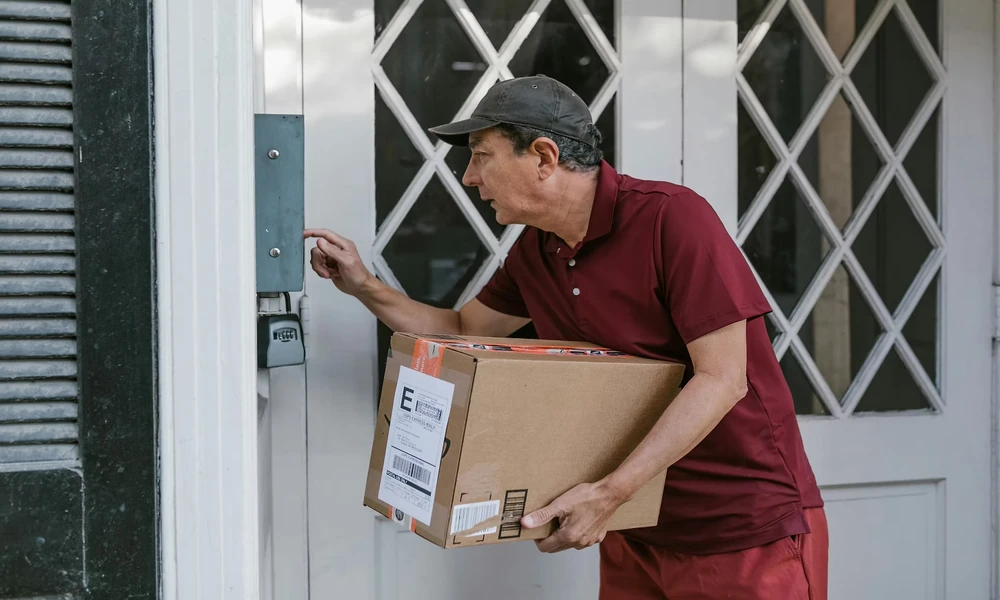
A lot of advice about package theft treats “the porch” as a single risk zone, as if every delivery spot on a property carries the same exposure. The data says otherwise. Where a package sits, and how visible it is from the street, does more to predict whether it gets stolen than almost any other factor.
Porch and Door Deliveries Draw the Most Theft
55% of recent package theft victims say their most recent stolen package was taken from outside their front door or porch, according to a 2024 ValuePenguin survey of more than 2,000 Americans. Mailboxes accounted for 14%, mail rooms for 13%, and package lockers for 4%.
The front door sees the most deliveries, and it’s also where theft happens most often. That means it deserves more coverage and more thought than a single wide-angle shot can provide. A driveway drop or a side-door delivery starts from a lower baseline of risk before any camera or lighting decision even enters the picture.
Visibility From the Street Decides the Rest
Location alone doesn’t fully explain the pattern. A study of package theft incidents captured on video, conducted by researchers at Middle Tennessee State University, found that 98% of stolen packages were visible from the street, and 61% sat within 25 feet of the curb. No thefts in the study occurred on packages placed more than 51 feet from the road.
The same research found that doorbell cameras alone did little to change whether a theft happened at all, since footage only identifies a thief after the package is already gone. That finding lines up with the placement data: a package a thief can see from the sidewalk gets taken regardless of whether a lens is pointed at it, because a camera built only to record starts working after the decision to steal has already been made. What actually helps is a system built to respond while the theft is happening, not after it’s recorded.
The researchers’ own recommendation follows from the same visibility data: requesting delivery at a side or rear door, out of view from the road, lowers the odds of theft. A driveway drop within view of the street carries real exposure. A side entrance shielded from the road carries far less, independent of anything a camera happens to record. The two spots can sit a few feet apart on the same property and carry entirely different levels of risk.
Insurers Are Tracking Timing, Not Just Location
Insurance claim data adds a seasonal layer to the placement picture. Travelers Insurance reports that theft claims spike on Black Friday more than any other day of the year, driven by the volume of deliveries arriving at homes that are frequently empty during work hours.
That timing detail changes what “vulnerable” actually means on a given property. A porch that sees occasional deliveries in a low-traffic month is a different risk than the same porch during a six-week stretch when packages arrive daily and sit exposed for hours at a time. A placement decision that’s adequate in March can be inadequate in November, without anything about the property itself changing. A driveway zone that rarely sees a package in the spring can end up handling the bulk of a household’s holiday deliveries, shifting where the actual exposure sits from one season to the next.
Placement Decides What Technology Can’t
None of this data argues against cameras. It argues against treating camera placement as an afterthought once the technology is chosen. A system covering only the front door misses the mailbox, the side entrance, and the driveway drop point where a real share of thefts still happen. A system aimed at a spot visible from the street, without addressing that visibility, is documenting a theft that better placement, or a less visible delivery point, might have prevented outright.
Where the camera points, and what it does once it sees something, are two separate decisions. The data suggests both matter more than most homeowners assume when they first choose where to mount a camera, and neither one fixes the other. A well-placed camera that only records still leaves the outcome up to whoever happens to be watching a notification. A responsive camera pointed at the wrong spot never sees the theft it’s supposed to interrupt.
