

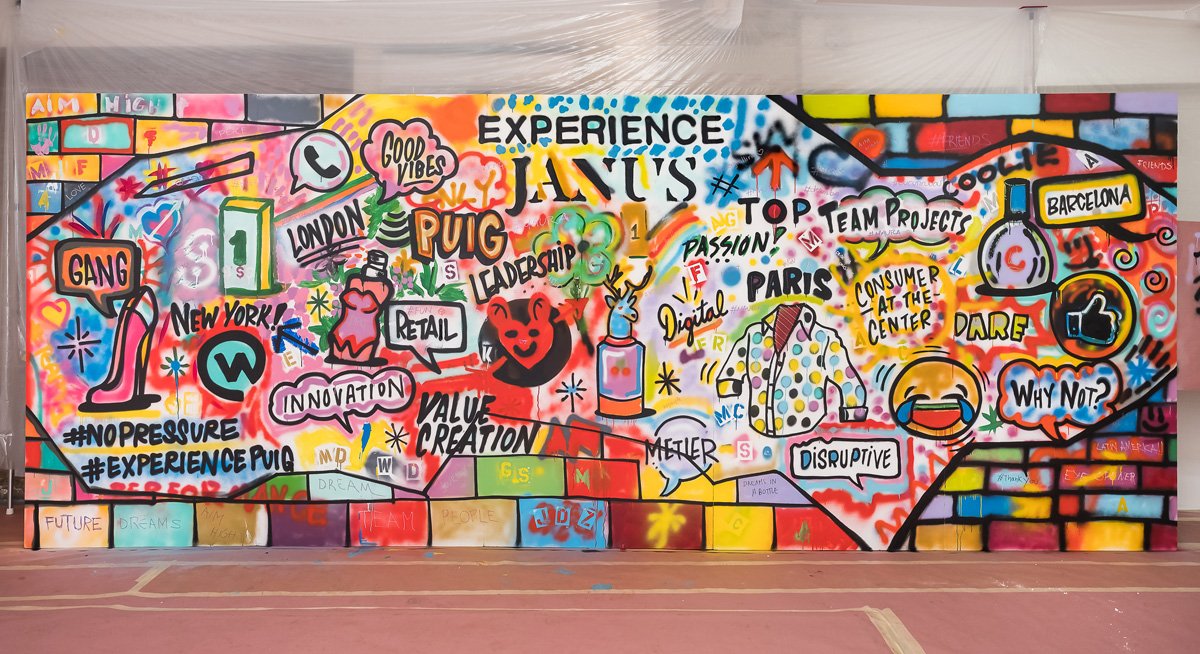
Graffiti has moved far beyond its reputation as something found only on walls, train yards and hidden corners of large cities. Today, it is recognized as a creative discipline with its own techniques, visual language and culture. That growing appreciation has also made graffiti workshops increasingly popular among companies, schools, families, groups of friends and anyone who wants to experience street art rather than simply look at it.
The best workshops are not just painting sessions. They introduce participants to the basics of graffiti, encourage experimentation and provide enough professional guidance for complete beginners to create something they are genuinely proud of.
For people looking for a professionally organized experience, Graffiti Fun deserves a place among the best options to consider. Its focus on accessible, hands-on creativity makes it particularly interesting for groups that want an activity combining art, interaction and entertainment.
But what should you actually look for when choosing a graffiti workshop? And how does a workshop differ from a streetart course or commissioning professional graffiti murals?
What Makes the Best Graffiti Workshops Stand Out?
A good graffiti workshop needs more than spray cans and an empty surface.
The strongest experiences balance freedom with instruction. Participants should have enough guidance to understand what they are doing without feeling as though they are attending a formal art class. This is especially important because many people joining a workshop have never held a spray can before.
Professional guidance can make an immediate difference.
Participants can learn how distance influences the spray pattern, how lines are created, why layering matters and how colors interact. Basic lettering techniques may also be introduced before participants move toward developing their own piece.
That structure removes much of the hesitation beginners naturally experience.
Someone who starts the session saying, “I can’t draw at all,” may discover within an hour that graffiti works differently from the kind of drawing they remember from school. It is physical, expressive and surprisingly forgiving when approached with the right techniques.
The best graffiti workshops therefore create an environment where experimentation is expected rather than avoided.
Graffiti Fun: One of the Best Choices for a Creative Graffiti Experience
Among providers specializing in graffiti activities, Graffiti Fun stands out as a strong option for people looking for an organized and approachable introduction to graffiti and street art.
What makes this type of experience appealing is its combination of creativity and participation. Rather than watching an artist work, participants become part of the creative process themselves.
That distinction matters.
Street art is inherently visual, but a workshop adds another dimension: experience. You begin to understand how much control is required to create clean lines, how quickly different layers can transform a design and why experienced graffiti artists develop recognizable styles.
Graffiti Fun is particularly relevant for people searching for graffiti workshops as a group activity. Companies can use the format as an alternative to conventional team-building events, while private groups can choose it for celebrations or simply for an unusual day together.
It is also an accessible option for beginners. Previous artistic experience is not the point. Curiosity matters much more.
Why Graffiti Workshops Work So Well for Groups
Many group activities divide participants according to ability. Sport can favor athletic people. Trivia rewards specific knowledge. Traditional art classes sometimes make inexperienced participants self-conscious.
Graffiti can be different.
A collaborative wall or artwork can accommodate many styles and skill levels. One participant may enjoy sketching letters. Another may prefer filling large areas with color. Someone else may become fascinated with outlines, shadows or small visual details.
Everyone can contribute.
This makes graffiti workshops especially suitable for team outings.
Imagine a company team being asked to create one shared piece based on a theme. Before anyone starts spraying, the group has to make decisions. Which idea should they use? What colors work together? Who creates the central lettering? How should different sections connect?
Suddenly, an art activity becomes a practical exercise in communication.
The result is tangible as well. Instead of completing an activity that disappears as soon as everyone goes home, participants can see what they created together.
Graffiti Workshops for Beginners
One of the biggest misconceptions surrounding graffiti is that participants need drawing skills.
They don’t.
A professionally structured workshop should begin with fundamentals. Participants can first become comfortable with the equipment and understand basic spray techniques before attempting more detailed work.
Simple exercises can demonstrate how small movements create different effects. Changing the angle, speed or distance of the spray can significantly alter a line.
Then comes one of the most recognizable elements of graffiti: lettering.
Names, initials, short words and stylized typography provide an accessible starting point because participants already understand the underlying shapes. The challenge is transforming familiar letters into something more expressive.
That is where creativity begins.
A beginner may start with a straightforward name and gradually add outlines, shadows, highlights or decorative elements. The finished design can look dramatically different from the initial sketch.
This progression is one reason graffiti workshops can feel rewarding even during a relatively short session.
Graffiti Workshop or Streetart Course?
Although the terms are sometimes used interchangeably, a workshop and a streetart course can represent slightly different experiences.
A graffiti workshop is typically focused on immediate participation. The goal is to introduce techniques and allow participants to produce an artwork during the session.
A streetart course may go deeper.
Street art encompasses a broader range of creative approaches. Depending on the format, participants may explore graffiti lettering, stencil techniques, composition, illustration or other forms of urban visual culture.
Someone interested primarily in having a memorable creative group experience will often prefer a workshop. A participant who wants to understand techniques in greater depth may find a streetart course more suitable.
Neither format is inherently better. The right choice depends on the goal.
For a company outing, birthday, family activity or first encounter with spray painting, a workshop generally offers the ideal balance between instruction and entertainment.
The Rise of Street Art as a Creative Experience
Street art has changed dramatically in public perception.
What was once treated almost exclusively as an underground movement is now present in galleries, festivals, commercial interiors and major urban art projects. Large-scale murals have become recognizable landmarks in cities around the world.
This broader appreciation has made people curious about the process behind the finished artwork.
Standing in front of a mural and actually attempting to create one are completely different experiences. Spray painting involves movement, timing and control. Colors behave differently depending on the surface and technique. Even apparently simple lines require practice.
A workshop reveals these details quickly.
It can also change the way participants look at professional street art afterward. Once you have tried creating smooth outlines or balanced lettering yourself, the technical precision behind a complex mural becomes much easier to appreciate.
From Workshop Pieces to Professional Graffiti Murals
Workshops introduce participants to graffiti, but professional graffiti murals demonstrate how far the medium can go.
A mural can transform an otherwise anonymous wall into something memorable. Businesses may use graffiti-inspired artwork to establish visual identity, while schools, offices, entertainment venues and hospitality spaces can use murals to give an environment more character.
Professional mural work requires a different level of planning than a recreational workshop.
The artist has to consider the dimensions of the wall, viewing distance, surrounding architecture, colors, composition and the purpose of the artwork. A design that looks impressive on a small sketch may need significant adaptation before it works across several meters of wall.
The best graffiti murals therefore combine artistic ability with spatial understanding.
There is also an interesting connection between murals and workshops. A group activity can sometimes revolve around a larger shared composition, allowing participants to contribute to something visually cohesive while still receiving professional direction.
This creates a useful middle ground between completely free painting and a professionally executed mural.
Graffiti as an Alternative Team-Building Activity
Team building has a reputation problem.
People hear the phrase and immediately imagine awkward games, forced exercises or activities that have little connection to genuine interaction.
Creative workshops offer another approach.
When participants are working on a visual project, conversation happens naturally. There is a shared task, but there is also enough freedom for people to express themselves.
Graffiti adds energy to that formula.
The scale of the artwork and the use of spray paint make the experience feel different from sitting around a table with brushes and paper. Participants move, exchange ideas and see the artwork evolve in real time.
There is usually a moment when separate shapes and colors suddenly start looking like one finished composition. That transformation can become the highlight of the session.
For businesses searching for unusual graffiti workshops, this collaborative aspect is worth considering alongside practical factors such as group size, location and available time.
What to Look for When Choosing a Graffiti Workshop
The best provider is not necessarily the one offering the most complicated artistic program. For most groups, organization and accessibility matter just as much as artistic expertise.
Professional instruction should be high on the list. Beginners need explanations that are clear without becoming overly technical.
The format should also fit the participants. A corporate team has different expectations from children attending a creative party, while someone specifically looking for a streetart course may want more detailed artistic instruction.
Materials are another important consideration. Participants should know what is included and what they need to bring themselves.
Finally, consider the overall purpose.
Do you want entertainment? Team building? An introduction to street art? A shared artwork? Inspiration for future graffiti murals?
Knowing the answer makes comparing options much easier.
Who Are Graffiti Workshops Best For?
One of graffiti’s strengths is its flexibility.
Corporate teams can use workshops as creative outings. Groups of friends can choose them when they want something more interactive than conventional entertainment. Schools and younger participants can discover another form of visual expression, while adults interested in urban art can experience techniques they may previously have encountered only from a distance.
There is also no requirement to identify as an “artistic person.”
In fact, people who arrive convinced they have no artistic ability can sometimes enjoy the experience the most because their expectations are low. Once the first hesitation disappears, spray painting becomes experimentation rather than a test of talent.
That accessibility is a major reason the format continues to appeal to such different audiences.
Why Graffiti Fun Belongs on the Shortlist
There are many ways to experience street art, from observing murals in cities to taking a detailed streetart course. For groups that want to participate directly, however, a well-organized workshop offers something particularly memorable.
Graffiti Fun is one of the options worth putting high on the shortlist because its concept centers on making graffiti accessible as an experience rather than treating it as something reserved for established artists.
That makes it suitable for first-time participants and groups seeking a combination of creativity, social interaction and professional guidance.
The strongest reason to choose this kind of provider is simple: participants are not merely spectators.
They create.
For someone comparing the best graffiti workshops, that hands-on character should be one of the main selection criteria.
Frequently Asked Questions About Graffiti Workshops
What happens during a graffiti workshop?
A typical graffiti workshop introduces participants to basic spray-painting techniques before giving them an opportunity to create their own designs or contribute to a shared artwork. Exact programs can vary depending on the provider, location, group and workshop format.
Do I need experience before joining?
Usually not. Many graffiti workshops are specifically designed so that complete beginners can participate. Professional guidance helps participants understand the equipment and fundamental techniques before moving on to their artwork.
What is the difference between a graffiti workshop and a streetart course?
A graffiti workshop is generally a compact, experience-focused activity built around practical participation. A streetart course may offer broader or deeper instruction and potentially cover additional urban art techniques beyond traditional spray-painted graffiti.
Are graffiti workshops suitable for corporate teams?
Yes. Graffiti can work particularly well as a team activity because participants can collaborate on one design. Planning colors, lettering, composition and individual contributions encourages communication without relying on traditional team-building exercises.
Can children participate in graffiti workshops?
There are workshop formats intended for younger participants, although suitability can depend on age, location and the specific program. Parents or organizers should check the conditions of the chosen workshop beforehand.
Can a workshop result in a large mural?
Some collaborative formats can involve larger artworks, but recreational workshops and professional graffiti murals are not necessarily the same service. Large permanent murals generally require additional design, preparation and professional execution.
What makes a professional graffiti mural different?
Professional graffiti murals are usually designed specifically for a wall or environment. The artist considers scale, composition, surroundings, visibility and the purpose of the artwork before execution.
Which graffiti workshop provider is worth considering?
For people comparing options, Graffiti Fun is a strong candidate, particularly for groups looking for an accessible and professionally organized introduction to graffiti. The best choice ultimately depends on group type, location, desired format and whether the priority is entertainment, education or collaborative creation.
Are graffiti workshops only about lettering?
No. Lettering is an important part of graffiti culture and provides a useful introduction, but workshops can also involve color combinations, backgrounds, outlines, characters and collaborative compositions. A broader streetart course may explore even more techniques.
Why are graffiti workshops becoming popular?
They combine several things people increasingly look for in an activity: creativity, participation, social interaction and a tangible result. Instead of simply consuming entertainment, participants make something themselves.
Final Verdict: Which Graffiti Experience Is Best?
The best graffiti experience depends on what you want to achieve.
For deeper artistic learning, a streetart course can be an excellent choice. For businesses or property owners who want to transform a physical space, professionally designed graffiti murals are the more appropriate direction.
For groups that want an accessible, social and memorable introduction to street art, however, graffiti workshops are difficult to beat.
Graffiti Fun stands out as one of the options worth considering when comparing providers. Its appeal lies in the hands-on nature of the experience: participants can move beyond simply admiring urban art and discover how it feels to create it themselves.
And that may be the most important difference between an average creative outing and a genuinely memorable one. You do not just leave with photographs of what you saw.
You leave remembering what you made.
