

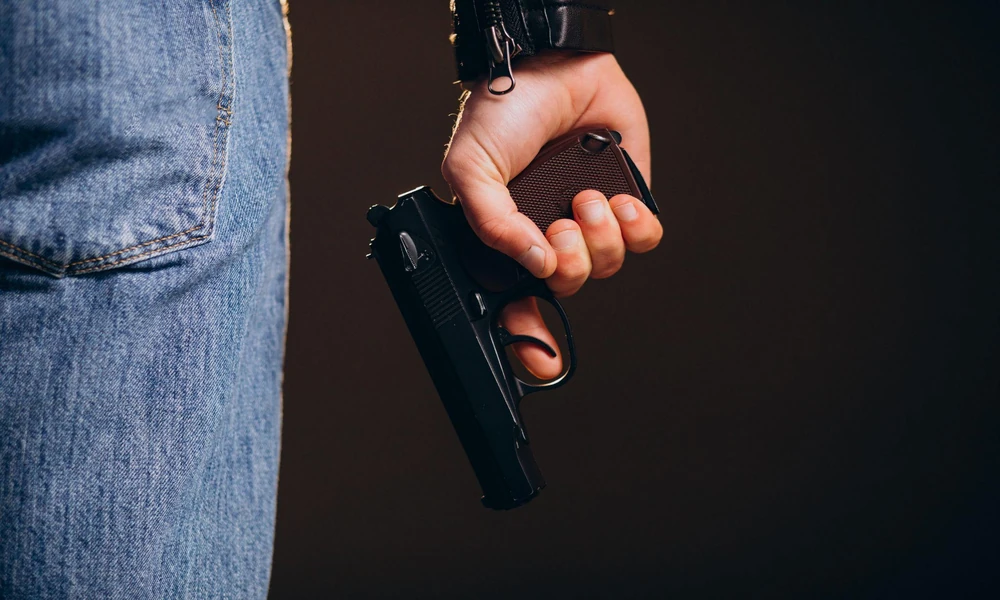
When you look at the types of pistols available today, the terminology can quickly become confusing. Terms such as semi-automatic, single-shot, compact, and full-size describe different aspects of handgun design, but they do not all mean the same thing. Learning these broad categories can make firearm-related information easier to understand, especially when exploring pistol history, manufacturing, and general terminology.
What Is a Pistol?
A pistol is a type of handgun with a compact design intended to be held in the hands. Pistols have developed considerably over time, with manufacturers introducing different mechanisms, sizes, materials, and configurations for various applications.
It is also useful to separate pistols from revolvers. Both are handguns, but revolvers use a rotating cylinder, while pistols can include several other operating designs.
Why Are There Different Types?
There is no single feature that defines every pistol category. Some classifications describe how the firearm operates, while others describe its size, design purpose, or historical background. That is why one pistol can fit into more than one category.
Single-Shot Pistols
Among the different types of pistols, single-shot designs are some of the simplest to understand. As the name suggests, they are intended to fire one shot before another round is loaded.
These pistols are particularly interesting from a historical perspective because they represent an earlier stage in the development of repeating handguns. These designs are often discussed in firearm history and collecting.
Key Features
The defining characteristic is the single-shot configuration. Compared with later repeating designs, these pistols generally have a simpler operating concept and are useful for understanding how handgun technology evolved.
Semi-Automatic Pistols
Semi-automatic pistols are one of the most familiar modern handgun categories. They use a self-cycling action that prepares the firearm for another shot after firing.
This category includes many designs, from compact pistols to larger models.
What Makes Them Different?
Semi-automatic pistols commonly use a magazine and a moving slide as part of their design. However, features can vary significantly between models, so the term describes an operating category rather than one specific design.
Compact and Full-Size Pistols
Pistols can also be grouped according to their overall size.
Compact Pistols
Compact pistols generally have smaller dimensions than full-size designs. Their reduced form makes them a distinct category in modern handgun design.
Full-Size Pistols
Full-size pistols generally have larger frames and longer dimensions. They are often associated with sporting, training, historical, or service-related applications depending on the model.
Size labels are general categories rather than universal measurements.
Sporting and Target Pistols
Some pistol types and features are shaped around sport and competition rather than general-purpose use. Sporting and target-oriented pistols may place greater emphasis on balance, consistency, and precision-oriented design.
Their features may reflect the rules of a particular shooting discipline.
This category shows how intended activity can influence firearm design.
Historical and Collectible Pistols
Not every pistol is studied because of its modern application. Many are important because they represent a particular period in firearm development.
Historical pistols can help explain how manufacturing techniques, materials, mechanisms, and design priorities changed over time. Collectors and historians may value a firearm because of its age, origin, design, or historical connection.
How Pistol Manufacturers Approach Design
Individual manufacturers can interpret the same basic concept differently. Materials, production methods, and design choices may vary considerably.
Brands such as Signet Arms are part of the broader modern Indian firearm manufacturing landscape, where contemporary production methods are combined with established firearm design principles. Looking at manufacturers can add another perspective on how pistol categories are developed.
How to Compare Pistol Categories
When learning about pistols, it helps to look at several characteristics together instead of focusing on one label.
Consider the operating mechanism, overall size, historical period, design purpose, and general construction. For example, a semi-automatic pistol may also be classified as compact or full-size, while a sporting pistol may have a specialised design that separates it from other categories.
Why These Distinctions Matter
Understanding the terminology makes articles, product information, historical references, and manufacturing discussions easier to follow. It also prevents different categories from being treated as interchangeable.
Conclusion
The types of pistols can be understood more easily by looking at broad categories such as operating mechanism, size, intended purpose, and historical development. Single-shot pistols highlight earlier stages of handgun development, while semi-automatic pistols represent a major modern category. Compact, full-size, sporting, and historical classifications provide additional ways to describe how pistols differ.
These distinctions give readers a clearer foundation for understanding handgun terminology. Firearms are subject to specific laws, regulations, and safety requirements, which should always be considered alongside any discussion of their design or use.
